The domain redemption period is the recovery stage after an expired domain has been deleted. Before that stage, a registrar may offer an auto-renew grace period; after it, the name can enter Pending Delete and become available to someone else. The exact dates and fees depend on the registrar and TLD, so treat the timeline below as a decision map, not a universal promise.
The quick answer
If a domain expires, renew it through the current registrar immediately. The site and email may stop resolving even when the name is still recoverable. If ordinary renewal is unavailable, ask for a restore during the domain redemption period, confirm the restore fee and request the registrar's exact release date. A transfer is normally a later decision: recover the name first, then compare the next renewal and transfer prices.
What the domain redemption period means
People use “grace period” to describe more than one event. A registrar may keep an expired name in an auto-renew window, while a registry's Redemption Grace Period (RGP) begins only after the registrar deletes the registration. Those stages have different pricing, service impact and recovery actions. Calling every stage a free renewal window can create a dangerous delay.
For generic TLDs, ICANN's Expired Registration Recovery Policy sets minimum notices and requires a 30-day registry redemption window after deletion. It also says registrars may offer an auto-renew grace period of 1–45 days. A country-code TLD can follow a registry policy outside that model, and a registrar's terms can change whether the name is auctioned during an earlier stage.
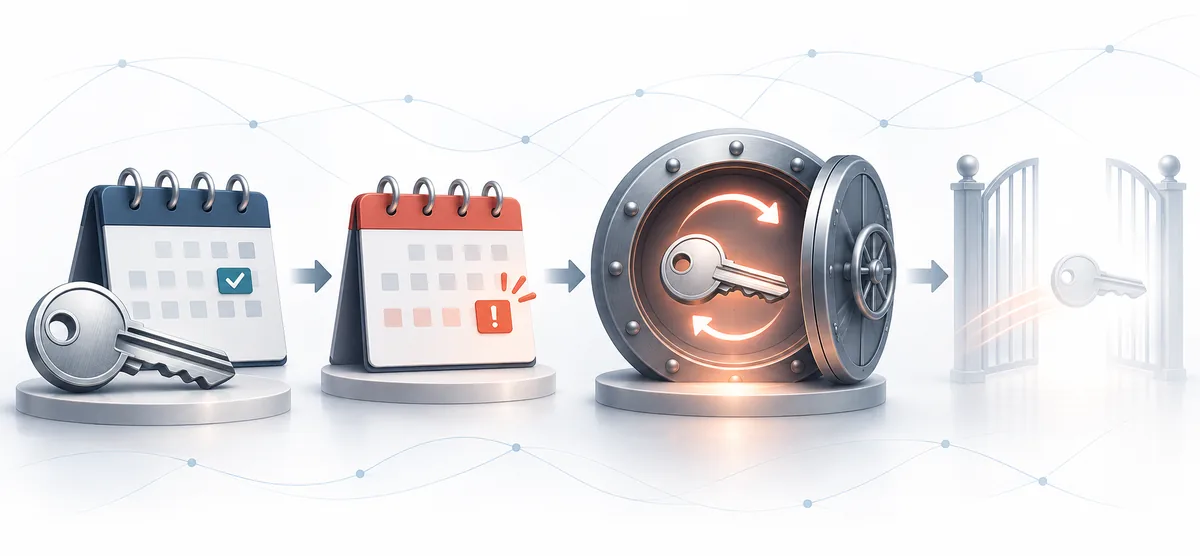
Domain expiration timeline: grace, redemption and release
The practical domain expiration timeline has four checkpoints. Use the date shown in your registrar account, not a calendar estimate based on a reminder email. Store the last safe renewal date in your own inventory because the website can fail before the registration is deleted.
| Stage | What may happen | Best next action |
|---|---|---|
| Before expiry | Reminder notices arrive; auto-renew and payment settings control the normal renewal. | Confirm the card, registrant email, auto-renew choice and the ordinary renewal price. |
| Auto-renew grace | The name may remain recoverable, but DNS, website or email service can be disrupted and an auction may be possible. | Renew immediately through the current registrar and ask whether a late fee applies. |
| Redemption Grace Period | The registrar has deleted the name; the registry blocks transfer and allows restoration for a limited period. | Request a restore, verify the fee and keep a written support reference for the deadline. |
| Pending Delete / release | Recovery may close and the name can be released or auctioned under the TLD's process. | Ask about the final release date; prepare a lawful alternative name instead of relying on a drop catch. |
These labels are intentionally conservative. One registrar can call its post-expiration period a renewal grace period while another parks the name, sends it to auction or deletes it earlier. The ICANN gTLD lifecycle overview explains the policy vocabulary, but your registrar and registry status remain the operational authority.
What stops working after expiration?
A domain is the address used to find your website, mail and verification services. When its registration or DNS service is disrupted, a browser may show a parking page, a lookup failure or a certificate mismatch. Email can bounce, password resets can disappear and third-party integrations may fail because their TXT or CNAME checks no longer resolve. The domain might still appear in your account while its services are already unavailable.
- Website: keep hosting active, but expect the hostname to stop reaching the server if the registrar suspends DNS.
- Email: inbound mail can bounce and outbound reputation checks can fail when MX, SPF or DKIM records are not reachable.
- Security and verification: SSL issuance, OAuth callbacks and domain ownership checks can fail until DNS returns.
- Business identity: customers may see a parking page or an unrelated page if the name is auctioned or registered by another party.
Do not cancel hosting or mail subscriptions just because the domain looks offline. Preserve the underlying services while you recover the registration, and record the DNS zone so you can verify the same records after restoration.
How to recover an expired domain
Move quickly and keep the actions in order. The goal is to return the domain to active status before comparing registrars or changing DNS.
- Check the exact status. Sign in to the current registrar and record the expiration date, status label, nameservers and any notice about auction, redemption or deletion. Use an ICANN Lookup or RDAP result as a second signal for generic TLDs.
- Try ordinary renewal. If the renewal button still works, pay the normal renewal price and save the receipt. Confirm the new expiration date rather than assuming the payment succeeded.
- Ask for restoration. If normal renewal is disabled, contact the registrar and use the words “restore” or “redemption.” Ask for the restore fee, required identity checks, expected completion time and final date before release.
- Protect the DNS path. Keep hosting, mail and DNS records available. After the name returns, verify A, AAAA, CNAME, MX, SPF, DKIM, DMARC, TXT, CAA and DNSSEC settings before declaring the incident closed.
- Rebuild the renewal plan. Turn on auto-renew only after confirming the payment method, set an external reminder and compare the next renewal price with the domain renewal cost calculator.
If the name is already in Pending Delete, ordinary customer support may not be able to restore it. Ask the registrar for a written status and release date. Avoid sending an Auth/EPP code or changing nameservers while the registration is deleted; those actions do not bypass a registry recovery rule.
How much can recovery cost?
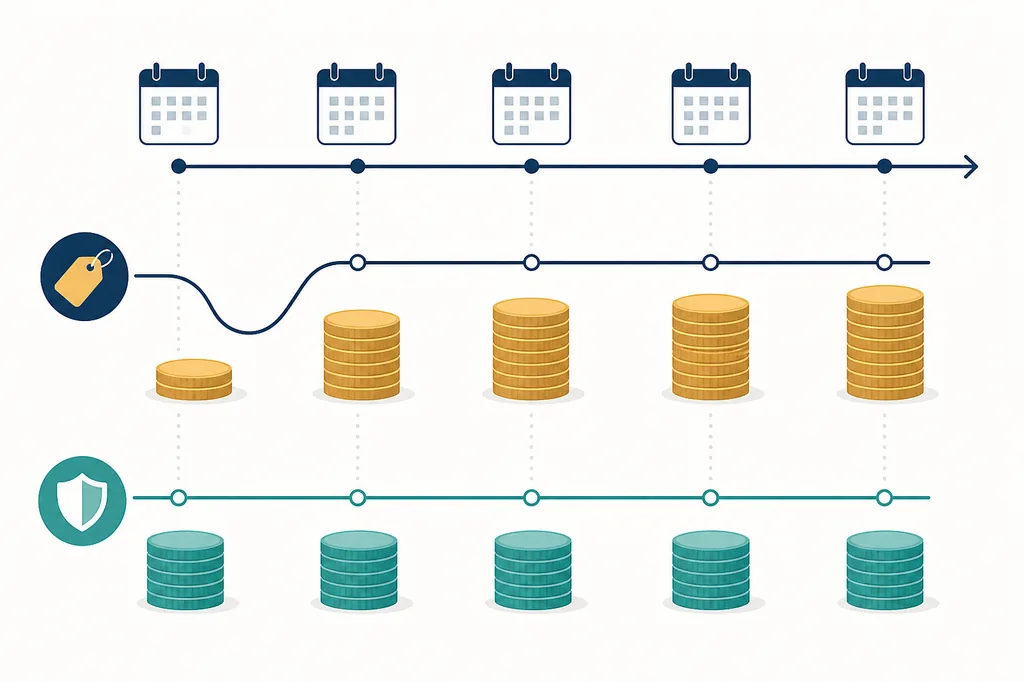
Normal renewal, late renewal and redemption are separate prices. A registrar can show an ordinary renewal in its public table but charge a much higher restore fee after deletion. Taxes, premium registry pricing, currency conversion, privacy and a required service can also change the checkout total. ICANN requires registrars to make renewal, post-expiration and redemption fees reasonably available, so check the registrar's fee page and ask support for the exact domain before paying.
Normal renewal
Best case: the domain is still active or inside an ordinary registrar window. Compare the recurring price in the domain renewal price comparison.
Restore / redemption
Higher-risk case: the name was deleted and the registrar must request restoration. Confirm the one-time restore fee and the new expiration date.
Replacement name
Release case: the name may be registered by another party. Price a clean alternative and check trademarks before redirecting a brand.
The cheapest plan is usually prevention. A small recurring renewal cost is easier to budget than an emergency restore fee or a lost business identity. If the domain is still active, compare the domain transfer cost comparison early rather than waiting until the expiration window is narrow.
How to prevent domain expiration
Build a renewal routine that does not depend on one inbox or one payment card.
- Enable auto-renew for important domains and check that the setting applies to the exact TLD, not only the registrar account.
- Keep the registrant email, billing email and recovery address current; ICANN notices go to the official contact record.
- Use a payment method with a future expiry date and a backup method where the registrar supports it.
- Maintain a private inventory with domain, registrar, expiration date, renewal price, DNS provider and business owner.
- Set an independent reminder 30 days before expiry, then review the final date and price at least one week before it.
- For a high-value name, renew early and document the post-payment expiration date before making a transfer.
Also review privacy and account security. The WHOIS privacy protection guide explains why a privacy add-on can affect the annual budget, while a separate account owner and recovery contact reduce the chance that a staff change hides a renewal notice.
Three practical scenarios
A domain expired yesterday: keep the website host and mail service running, sign in to the current registrar, pay ordinary renewal if available and verify the DNS records. Do not start a transfer until the status is active again.
A domain shows redemption: ask for a restore quote and deadline immediately. Compare the restore fee with the value of the name, but do not wait for a cheaper registrar because a deleted name normally cannot be transferred.
A domain is pending delete: request the release date in writing, prepare a replacement name and check brand or trademark risk. A drop service is not a guaranteed recovery method, and a third party may register the name first.
Policy sources and limitations
This guide was reviewed on 2026-11-17 against ICANN's Expired Registration Recovery Policy summary and its gTLD lifecycle guidance. Namecheap's TLD grace-period table shows why registrar windows can differ. TLDPrice provides comparison and planning information, not a registrar quote; the exact TLD policy, account status and checkout total control your recovery decision.
Domain redemption period FAQ
What is a domain redemption period?
The domain redemption period is the recovery window after a registrar deletes an expired generic TLD registration. ICANN requires generic TLD registries to offer a 30-day Redemption Grace Period, but the registrar may charge a restore fee and the exact workflow can vary.
How long is the domain expiration grace period?
There is no universal registrar grace period. ICANN allows an auto-renew grace period of 1 to 45 days when the registrar does not immediately delete the name. Your registrar and TLD policy determine the actual date, fee and service status.
Does a website work after a domain expires?
It may stop working immediately or during the registrar grace stage. DNS service can be disrupted, so the website, email and verification records may fail even while the name is still recoverable. Check the registrar status and renew promptly.
Can I renew a domain during redemption?
Usually you must ask the current registrar to restore the deleted domain, rather than using the ordinary renewal button. The registrar may require a restore or redemption fee, identity checks or a manual support request before the name returns to active status.
What happens if the redemption period ends?
The name can move to Pending Delete and then be released for registration or auction, depending on the TLD and registrar. Once another party registers it, recovery is no longer a normal renewal and may require negotiation or a legal process.
Can I transfer an expired domain to another registrar?
A normal registrar transfer usually requires the domain to be active and eligible. Renew or restore it first, check transfer locks and waiting periods, then compare transfer cost with the next renewal. Do not rely on a last-minute transfer to rescue an expired name.
How can I prevent domain expiration?
Turn on auto-renew, keep a valid payment method and registrant email, read the registrar reminders, and review expiration dates in a small inventory. For important names, renew early and keep a second reminder outside the registrar account.
Summary: recover first, compare later
The safest response to a domain expiration is immediate status checking. Renew while the name is in an ordinary registrar window, request a restore during the domain redemption period, and treat Pending Delete as a release risk. Keep DNS and email services ready, confirm the exact fees and dates, then build an external renewal routine so the same domain expiration grace period never becomes an emergency again.